Undiagnosis Stress causes 60% of all illness + disease.

3 out of 4 Doctor visits are due to Stress.

Stress costs Organizations €1 Billons in lost productivity + medical costs every day.

How do leaders address stress?
Leaders with the power to identify how stress affects the overall health, productivity and morale of the entire organization set themselves apart by doing so. Tackling the causes of stress in individuals and in organizations leads to higher performance, fewer missed days and, most importantly, reinforces your company truly cares for its employees.
Start diagnosing stress – and begin creating a healthier, more productive workplace by using TTI SI Stress Quotient™
7 WAYS STRESS MANIFEST
Stress Quotient Assessment reveal sources of organizational anxiety.

7 things you’ll discover about stress by using
TTI SI Stress Quotient™

You’ll learn where your stress is coming from, and what it is impacting.
After assessing seven key stress sources, you’ll know which one is causing you the most stress, and you’ll have prompts for how to address it.

You will discover how intense individual and group stress levels are.
This helps identify stress hot spots in work groups, departments or the entire organization so you can compare and contrast.

You and your team will begin communicating
about stress.
Once you understand where stress originates and the intensity of it, you can openly discuss the effects experienced at work and how everyone is coping.

You’ll determine how stress is impacting productivity.
Engagement and morale in your company are the lynch pins of productivity. When they are hampered by stress, productivity
will be affected.

You’ll see if demands at work spur collaboration or cause fights.
When demands are high, stress builds and responsibilities increase.

You’ll know if the people around you
feel rightly recognized.
People want to be recognized in different ways — and the manner you are recognizing them might not be resonating, causing stress.

You’ll uncover issues you thought were resolved — but aren’t.
You can’t repair what you don’t know is broken. Stress can fester when issues remain unresolved in people’s minds.

Individual Report
TTI SI Stress Quotient™ measures 7 core stress hotspots and 17 subfactors that have the potential to contribute to an individual’s overall stress in the workplace.
Stress Factor – Effort/Reward Balance
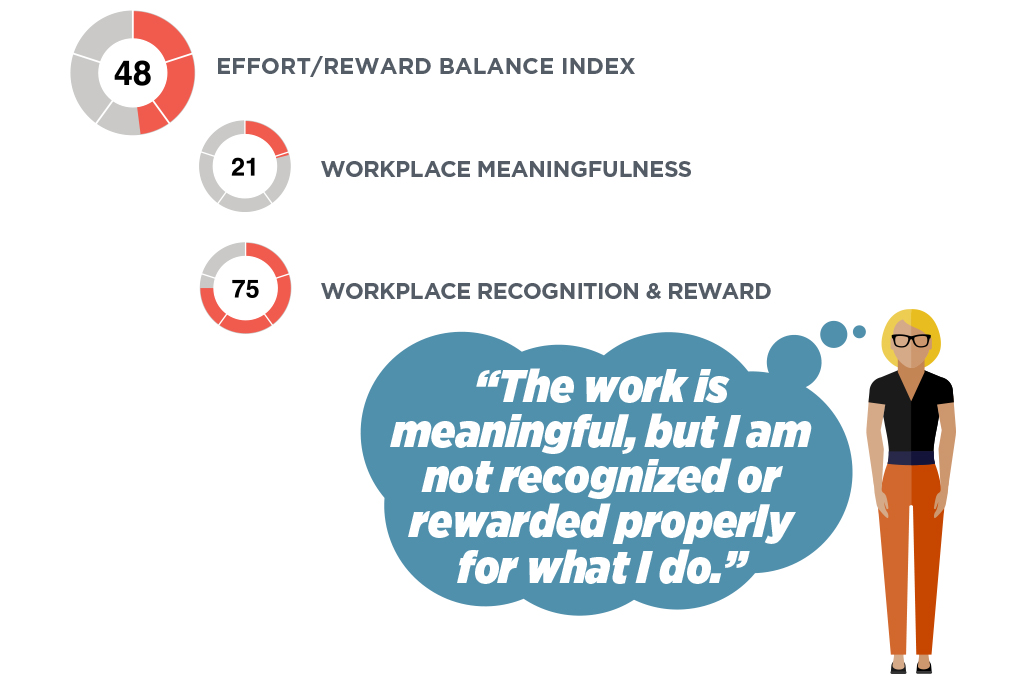
Job satisfaction stems not only from enjoying the work itself, but also rewards in the form of compensation, benefits and overall satisfaction based on aligned cultural values. When those desires aren’t met and workloads pile up, stress and burnout can build slowly over time, creating a significant disconnect between workplace needs and satisfaction. As this graph shows, this individual views the work as genuinely meaningful, but feels he is not being properly recognized or rewarded for his contribution. Is someone taking credit for his work? Does he believe he’s not getting fairly compensated? Calling attention to this impasse can certainly help lessen the stress this individual has regarding workplace recognition and rewards.
Stress Effects Analysis.
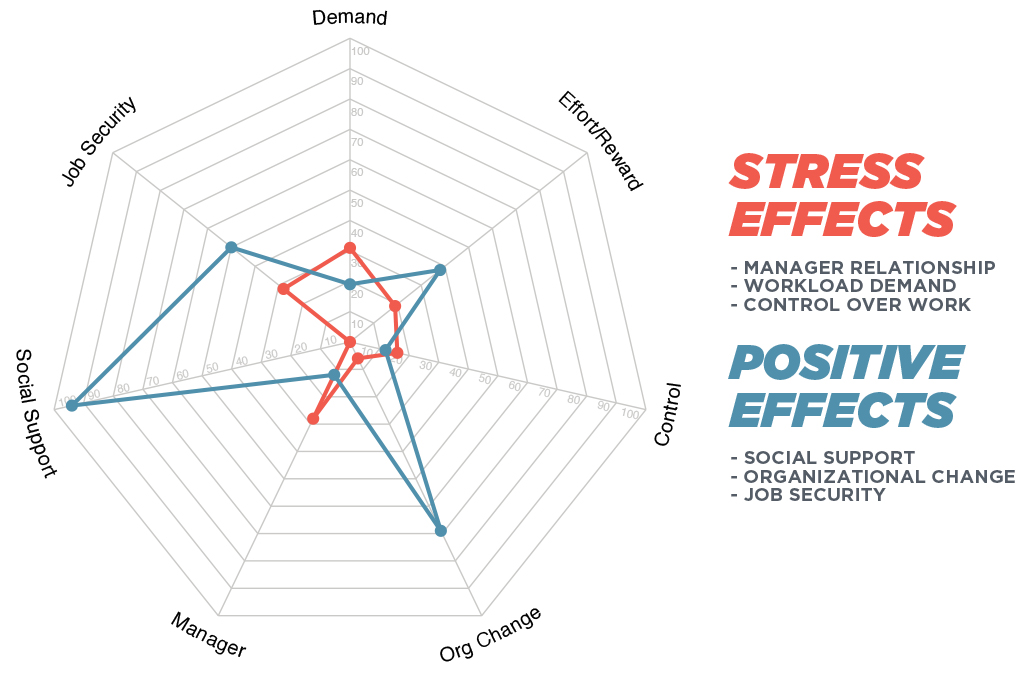
There’s good stress and bad stress. Good stress gets us up in the morning and allows us to deal with the challenges that help us learn and grow. But what about the bad, debilitating stress? Stress not only impacts us physically and emotionally, but also has a direct effect on how we perceive job security and workplace demands. As this graph matrix shows us, stress is festering for this individual, but it’s not happening at the surface level. In other words, this person likely won’t explode at work due to a buildup of uncontrolled emotions. The stressors impacting this individual include a real or perceived touchy relationship with their manager, as well as moderate concerns about their workload demand and the control they have on their work. The longer these issues go unchecked, the greater the possibility there is for this individual to experience burnout and even heightened stress in these areas.
Group Report
Combine multiple individual inputs into a single stress pulse for a team, group, department or entire organization.
Group Stress Index Summary
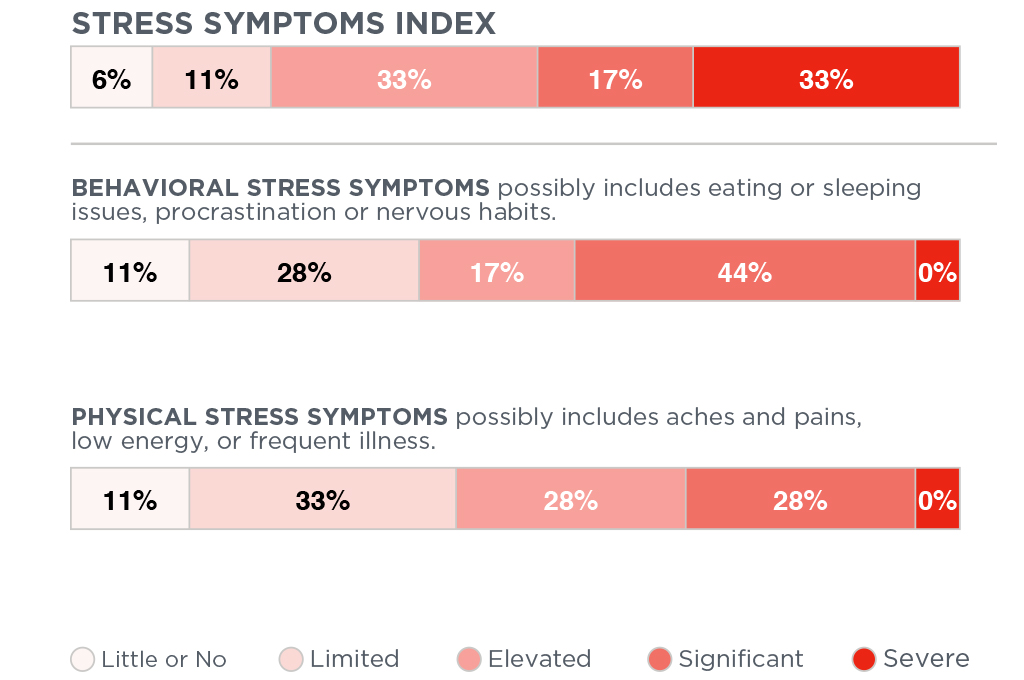
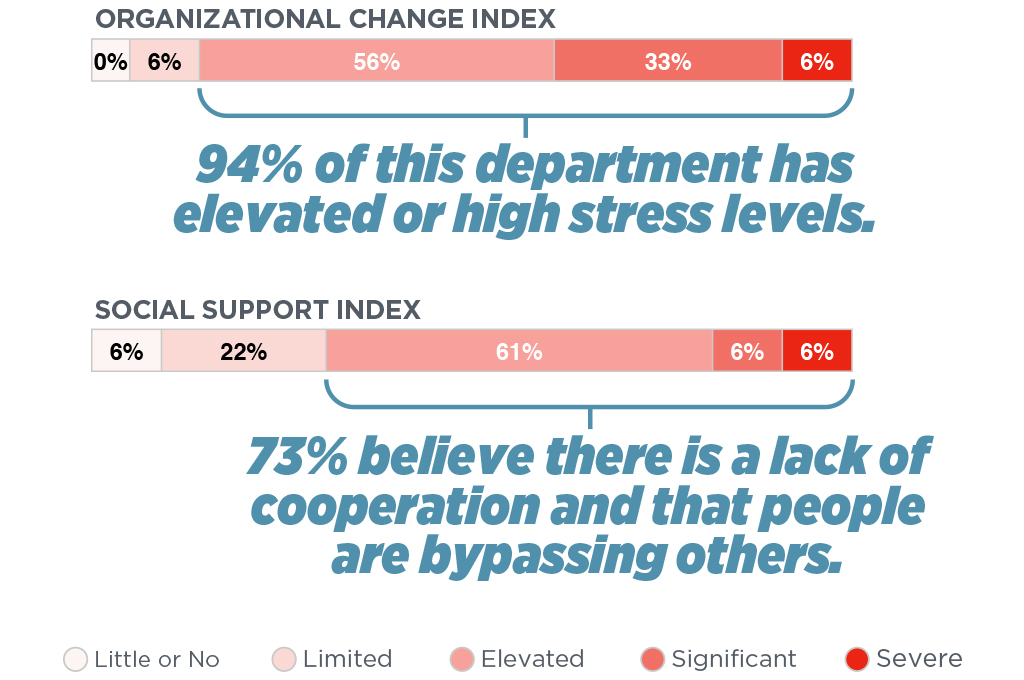
Like an illness, stress can spread throughout an office and have a controlling effect on team dynamics. As this summary graph shows, stress has greatly impacted the organization (18 employees were surveyed) as 94 percent of the department has elevated and significant stress levels. The Organizational Change Index tells us how stress has a perceived impact on organizational communication, or how policies, procedures and other policies are communicated, as well as achieving change for the future. Stress also has a large, perceived impact on this group’s social support network; 73 percent of respondents believe there is a lack of cooperation and that people are consciously or unconsciously bypassing others or situations that might cause conflict.
Stress Symptoms.
Stress can be a positive in our lives, spurring us into action to accomplish tasks. But often, stress is a negative, particularly when faced with continuous challenges we are not equipped to handle. Because we don’t always want to admit we’re stressed in the workplace, it can be a silent killer, as the symptoms aren’t always pronounced. Managing these physical and emotional symptoms allows us to better deal with stress. As this summary graph shows, behavioral stress symptoms, which include eating or sleeping issues, procrastination or other nervous habits, have had an effect on this group and impacted work at this organization. Physical and emotional symptoms, including low energy, frequent illness, irritability and feeling overwhelmed also scored high and are typically of major concern to employers. These stress-related issues tend to fester and impact productivity or one’s ability to show up to work.